The ninth concert of the 155th season of the Michigan City Municipal Band (MCMB) will be held Thursday, August 3, 7:30p, at the Guy F. Foreman Bicentennial Amphitheater in Washington Park. The concert will feature euphonium soloist Hiram Diaz, and will also present the premiere of the MCMB’s 2023 commission, Blue Water, Blue Sky by Catherine McMichael.
In the case of inclement weather, the concert will be held in the auditorium of Michigan City High School, 8466 W. Pahs Road.
The August 3 concert repertoire will be:
Pride of the Marines March by Austyn R. Edwards
Concerto for Euphonium and Band by Tom Davoren
Sobre Las Ojas (Over the Waves) by Juventino Rosas
The Basses are Loaded by Kelly Bennette
Tripwire by JaRod Hall
Blue Water, Blue Sky by Catherine McMichael (premiere)
Pax by Catherine McMichael
Born to Be Wild by Mars Bonfire, arr. Johnnie Vinson
Audience sing-along: My America arr. Joyce Eilers
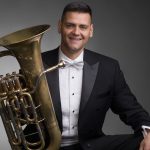 Hiram Diaz grew up in Miami. He graduated from Miami’s New World School of the Arts, then earned a bachelor’s degree from the University of Cincinnati College Conservatory of Music. He joined the US Marine Band, “The President’s Own,” in 2012. He is co-leader of the Marine Band’s Latin Jazz Ensemble. GySgt. Diaz will be playing Concerto for Euphonium and Band by award-winning composer Tom Davoren. The Michigan City Municipal Band commissioned Mr. Davoren to write this three-movement composition.
Catherine McMichael lives in Saginaw, Michigan. She earned bachelor’s and master’s degrees in music from the University of Michigan. Mrs. McMichael teaches at Saginaw Valley State University and also leads the handbell choir at First United Methodist Church in Saginaw. She is an active composer of music for band, choir, orchestra, handbells, individual instruments, and chamber ensembles. A few of her recent commissions include The Canadian Brass, Saginaw Bay Orchestra, Chautauqua Institution, University of Massachusetts at Amherst, and the New England Conservatory.

 Blue Water, Blue Sky contains beautiful themes that represent Lake Michigan, the blue sky at Washington Park, and even an original sea shanty for the band. Pax is a gentle and reflective composition that allows us to envision peaceful sounds and a peaceful world.
Austyn R. Edwards (1891-1977) was a professional trumpet player who taught brass instruments at Valparaiso University, and was conductor of the band at the Kingsbury Ordnance Plant in LaPorte County. In addition to 55 marches, including Pride of the Marines, Mr. Edwards was the author of two important method books for trumpet.
Juventino Rosas (1868-1894) was a Mexican composer and violinst. His composition, Sobre Las Ojas (Over the Waves), is a smooth waltz that audience members will recognize from its frequent use as background music for trapeze artists in the circus.
Kelly Bennette’s composition The Basses are Loaded is a comical way to proclaim that the lowest voices in the band have the melody. Mr. Bennette is professional tuba player and retired music educator with nearly 100 compositions to his credit.
Also from Texas, JaRod Hall is music educator, composer, and professional tuba player. In his program notes from Tripwire, Mr. Hall suggests that the audience imagine “…a team of bandits who must escape a secret hideout without being Continue reading

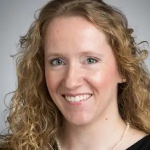 Anne Marie Bice is a voice professor from Valparaiso University. She has extensive performance experience, sings in a wide variety of styles, and has been soloing with the Michigan City Municipal Band since 2015. In her final appearance with the MCMB this summer, Prof. Bice will sing music from two movies: Moana and Pocahontas.
 In addition to being outstanding performers, many of the Michigan City Municipal Band members are successful conductors. On five concerts this season, conductors from within the band are being featured, each leading one composition. On June 29, Virginia Hernandez will conduct Bugle Call Rag by Eubie Blake and Carey Morgan. Mrs. Hernandez serves as director of bands at Griffith High School. She earned degrees from Bowling Green State University and DePaul University. Mrs. Hernandez plays trumpet in the Michigan City Municipal Band and Windiana Concert Band. African American composer and pianist Eubie Blake lived from 1887-1983, and was an important creator of ragtime, jazz, and popular music. In 1981, he received the Presidential Medal of Freedom. Born in Indiana, Carey Morgan was an important Vaudeville composer and producer who served in the US Navy during World War I.
 In addition to being outstanding performers, many of the Michigan City Municipal Band members are also successful conductors. On five concerts this season, conductors from within the band will be featured, each leading one composition. On June 22, Frank Gast will conduct Blinding Lights by popular artist Abel Tesfaye, known professionally as “The Weeknd.” Mr. Gast serves as director of bands at Michigan City High School. He is a graduate of Ball State University and Chesterton High School. Mr. Gast plays trumpet in the Michigan City Municipal Band and has been a member of Windiana Concert Band.